A recent study published in Psychological Medicine has discovered that adolescents with depression are more sensitive to parental criticism and less sensitive to parental praise compared to healthy adolescents without depression, as indicated by measurements of heightened brain activity and self-reported ratings of mood.
Adolescent depression is a serious and common mental health concern, resulting in a low sense of self. Negative interactions between parents and adolescents have been linked to the development of depression. However, little is known about how adolescents with depression specifically respond to parental feedback. Hence, Lisanne van Houtum from Leiden University in the Netherlands alongside her colleagues decided to investigate the emotional and brain responses of adolescents with depression to feedback from parents – both negative feedback (criticism) and positive feedback (praise).
The researchers recruited 20 Dutch adolescents who were aged 13.5 to 18 diagnosed with either dysthymia (a mild, chronic form of depression) or major depressive disorder (a severe, acute form of depression). 59 healthy adolescents aged 12 to 18 without depression were also recruited. For both groups, the adolescents’ parents were also invited to join the study.
Both adolescents and their parents were initially presented with ‘feedback’ words which were one-word descriptions of personality characteristics. They were tasked with rating these words as either negative (e.g. ‘untrustworthy’), neutral (e.g. ‘chaotic’) or positive (e.g. ‘kind’), in addition to rating how applicable these words were to the adolescents.
The adolescents were then placed inside an magnetic resonance imaging (MRI) scanner to measure their brain activity.
Before beginning the task, the adolescents were falsely informed that their mother or father would choose both positive and negative feedback words they found best described the adolescent’s personality. Each feedback word was prefaced with ‘Your mother/father thinks you are…”. In practice, participants were actually shown a mixture of preprogrammed feedback words, and after viewing each feedback word, the adolescents reported their mood.
Following this task, outside of the MRI scanner the adolescents were asked to freely recall as many of the feedback words as they could in 2 minutes.
Using mathematical modeling, the researchers discovered that both depressed adolescents and healthy adolescents experienced a decrease in mood after criticism and an increase in mood after praise, compared to neutral feedback. However, the degree of mood increase following praise was blunted in depressed adolescents compared to healthy adolescents.
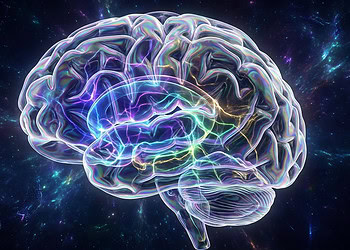
Analysis of the MRI scans revealed adolescents with depression demonstrated increased brain activity compared to healthy adolescents in response to criticism, particularly in the subgenual anterior cingulate cortex (sgACC). The sgACC region has been hypothesized to be a ‘gatekeeper’ between brain regions that control higher-order cognition and brain regions that control emotion, therefore being critical in the management of mood. Hence, van Houtum predicts that “increased sgACC activity may [indicate] attempted coordination of the [cognitive] and [emotional] circuits [in the brain]”.
The MRI scans also demonstrated increased activity in the depressed adolescents compared to healthy adolescents in the temporal pole, which is thought to store social knowledge, in addition to brain areas associated with memory of lived events – namely the hippocampus and parahippocampal gyrus. These findings align with how depressed adolescents freely remembered more criticism than praise after the MRI scans, suggesting that this group tends to have a bias towards paying attention to negative feedback and memorizing negative feedback more strongly.
As anticipated, the adolescents with depression demonstrated more negative self-views. This was clear in how positive feedback words were rated as less applicable to self and negative or neutral words were rated as more applicable to self, when compared to healthy adolescents. Additionally, it was clear that parental feedback, whether it was praise or criticism, resulted in an increased mood if matching with the adolescent’s self-view. Van Houtum is hopeful that parental involvement could potentially aid in treatment: ‘identifying personality characteristics adolescents value about themselves may be key to improving their depressed mood… parents could be taught to identify and acknowledge these valued characteristics of the child, and in doing so support the development of a positive self-view.”
While mood was improved in both groups if praise was aligned with the adolescents’ self-views, interestingly criticisms that aligned with self-view resulted in a smaller increase in mood in depressed adolescents compared to healthy adolescents. ‘Adolescents with depression are especially sensitive to parental criticism: they view themselves already negative, and rely less on their self-views when confronted with parental criticism,” van Houtum suggests. In other words, parental criticism seemingly overpowers the reassuring nature of the confirmation of one’s sense of self.
Van Houtum expressed some difficulties of recruiting during the COVID-19 pandemic, resulting in a small sample size. Some adolescents also had other medical or psychiatric conditions, including anxiety disorders, and this may have influenced emotional states during the study. Parents who are more harsh or neglectful may also have been poorly represented in the study, despite these parenting styles having a strong association with depression in adolescents. Nevertheless, the study raises important questions about parents’ roles in the mental health of their adolescent children.
The study, “Sticky criticism? Affective and neural responses to parental criticism and praise in adolescents with depression”, was authored by Lisanne A.E.M. van Houtum, Mirjam C.M. Wever, Charlotte C. van Schie, Loes H.C. Janssen, Wilma G.M. Wentholt, Marieke S. Tollenaar, Geert-Jan Will, and Bernet M. Elzinga.